Over the past three weeks, a dedicated team of NAB employees and local business representatives have been immersed in the Community Strategy Challenge (CSC) in Singleton NSW, delivered as part of the NAB Foundations’ Regional Economic Resilience Pilot Program.
Working alongside our community partners, Singleton Council and Business Singleton, the team were tasked with developing an industry attraction strategy focused on positively impacting Singleton’s economic future. This was a collaborative challenge that involved listening to local voices, hearing lived experiences and understanding the real opportunities and pressures shaping the region. Singleton is a community with enormous heart, resilience and ambition, and it’s been inspiring to see the skilled volunteers lean into that with curiosity, empathy and a genuine desire to contribute.
What stood out most across the challenge is the way the team stayed anchored to purpose. They embraced complexity, asked thoughtful questions and brought their diverse skills together to make sense of what they heard and what they can provide. The energy in the room, whether they were mapping insights, meeting stakeholders or refining emerging ideas reflected the best of skilled volunteering: corporate capability meeting community wisdom to co‑design a meaningful strategy.
A heartfelt thank you to our partners for their openness and collaboration, and to the skilled volunteers for the dedication you brought every single day. We’re excited for the final stretch and for what this work will unlock for the Singleton community.
CEO Authored thought piece published by Better Boards 2 July 2025
What is ESG?
ESG (Environmental, Social, and Governance) principles and practices are significant factors for investors and members to consider when determining a company’s ethical value. Adherence to ESG frameworks is increasingly important for a company’s sustainability and for retaining its social license to operate.
It is worth noting that companies that don’t define and measure their ESG authentically and ethically will face increasing scrutiny and potential backlash from a better-informed community. Breaking down ESG into its components helps us better understand its purpose in our organisational structure.
Environmental ethics consider issues such as carbon emissions, climate change, resource efficiency, conservation, pollution control, and waste management.
Social solidarity focuses on how companies engage with their communities and employees. Key aspects of this principle include community impact and engagement, diversity and inclusion, human rights, and labour practices.
Governance refers to company management and encompasses several important factors, such as board structure and independence, ethics, transparency, and executive compensation.
Measuring social outcomes, or ‘S’, in ESG has historically been poorly defined compared to Environmental impacts and Governance frameworks. This presents a challenge for all boards, including not-for-profit boards, to understand their contribution and transparently monitor whether the intended outcomes are being achieved. In this article, I will explore ABV’s model for sustainable social outcomes, which we have been dedicating our time to define.
Social Outcomes: Community Engagement and Impact
A company’s level of community involvement and the impact of its operations on local communities are significant components of the social principle. The importance of this aspect cannot be overstated, as businesses do not exist in a vacuum; they are part of our society. Companies are evaluated on whether they positively contribute to the communities in which they operate.
Furthermore, a company’s contribution to local economic development and how it addresses any negative impacts are also significant considerations. A company with robust community engagement is often seen as having strong social responsibility, fostering trust and goodwill among its stakeholders.
As a CEO working for a mission-driven not-for-profit organisation, my primary focus is exceeding our partners’ expectations, demonstrating measurable results, and creating tangible positive outcomes for the people we impact. Creating lasting social change requires expertise and dedicated resources. Board and management need to be clear on how ESG frameworks can be realistically and authentically implemented to create lasting and beneficial change for communities. We work closely with small businesses, entrepreneurs, families, neighbourhood centres, and business chambers to empower these groups through business support.
A case study in pivoting to needs of disaster affected communities in Australia.
Since 2020, ABV has undertaken a strategic shift to also work in disaster resilience initiatives aimed at mitigating the impact of disasters on regional Australian communities. This new program runs alongside strengthening small businesses in the Pacific which is work ABV has been doing for 40 years. As an international development agency, ABV saw a significant gap in supporting communities in preparedness and response through the 2019-2020 Black Summer bushfires on the East Coast of Australia. Communities hadn’t been engaged in their preparedness plans and were ill equipped to participate in their own response and recovery. ABV were able to bring international disaster preparedness and recovery principles alongside these communities, along with world class volunteer management, place-based planning capability and business continuity skills. Additionally, ABV’s volunteers weren’t able to travel into the Pacific and were available to pivot to this domestic work.
With time and skills on standby, ABV’s CEO, Liz Mackinlay, saw an opportunity to help communities and organisations impacted by the black summer bushfires. After emergency agencies were gone, businesses and charities were left scrambling for resources to rebuild their livelihoods. Liz knew that grant writing, business strategizing, marketing plans and other crucial business functions for resilience require expert guidance. ABV stepped in with remote business professionals who volunteered their time to support disaster resilience across New South Wales and Victoria. ABV’s pivot reflects a recognition of the increasing frequency and severity of natural disasters affecting Australia and the need for proactive measures to protect vulnerable communities.
How not-for-profits measure the social impact of our programs is important
Sustainability reporting often focuses only on the inputs and outputs of socially focused programs, such as the number of labour practices, employment programs, and community engagement. These metrics are easily measurable and make for simple reporting. However, what is left out is the outcomes of these programs, especially their long-term effects on community well-being and sustainability.
To measure outcomes, companies must engage deeply with the community and commit to understanding the effects of their social programs. The UN Sustainable Development Goals and other development frameworks prioritise the principle of doing no harm, and boards must ensure that their socially focussed programs produce no short—or long-term damage.
Truly understanding the needs of the community and implementing outcomes-based reporting is complex work. However, it will ensure that management and boards can be confident that their social responsibility efforts are designed and implemented effectively for the good of the community.
This article was first published in the 2024 Better Boards Conference Magazine.
Responsible for leading NAB’s first operational teams in India in 2014, Tina gained an appetite for working across cultures to build deep lasting connections and change.
Thinking about it for some five years, Tina says it wasn’t until the stars aligned through NAB’s partnership with the First Nations development organisation, Jawun, that this expression fully took off with place-based volunteering.
“I had the support of my partner, and my manager at the time, to embark on this volunteering opportunity NAB supported with Jawun and dedicate six weeks to work in the Kimberley, and with the local organisation, develop an action plan and roadmap for success,” Tina says.
“I learnt so much professionally and personally through this opportunity, and through it developed a strong desire to be an active ally to First Nations people going forward.”
Through NAB’s partnership with Australian Business Volunteers, Tina was given the opportunity to do just that by drawing on her wide-ranging professional skills to provide transformative social value.
Applying for NAB’s Customer Strategy Challenges Program, Tina joined 11 business experts from NAB to join a nine-day challenge for their customer, Clothing The Gaps.
“On the first day, we went to the office and CEO Laura, a Gunditjmara woman, had tears,” Tina says. “We were the most number of non-Indigenous people to be in the space, and without knowing who we were, we realised the trust and responsibility that Larua and her team were imparting on us.”
Apprehension dissolved to empowerment as the NAB team of expert volunteers came together with the support of Australian Business Volunteers grounded facilitation.
“ABV created a safe space to learn and have creative freedom to operate outside of our comfort zones. We were able to lean into our specific skills, respectfully challenge one-another to grow the strategy, and come together for a shared goal.”
By the end of the nine days, Tina and the NAB team had developed a clear concise three year business strategy detailed across 40 slides, a 68 page report and 11 supporting documents with key insights and observations.
When the team presented the strategy alongside video recordings from customer reflections, the CEO, Deputy CEO and Warehouse Director, were touched. “There were tears once again, but this time from gratitude, capturing the full circle that we had come in such a short time. “
“ABV coordinated post-event debriefs with us all one month and six months after, where they shared how they were using the work and the impact it had made.”
Influencing big decisions from Clothing The Gap’s product range, stock orders through to lifestyle benefits for the team, the strategy had helped inform evidence-based decisions, as well as engage people across the organisation on a shared strategic journey.
Speaking to the skills she gained through this process, Tina says she has become a more engaged colleague and a much stronger leader through this process. “I have worked outside of my comfort zone and been able to walk alongside people from different cultures, expertise and levels in an organisation.”
“I have also learnt to negotiate with colleagues, challenge one another respectfully and grow together towards a shared goal; not to mention the lasting relationships I’ve forged with likeminded people through volunteering who are truly inspiring.”
For those wanting to connect with the community through volunteering experiences like this, Tina recommends finding an organisation you are passionate about and not underestimating what you can bring to the table. “Your level of investment will be based on the passion you have.”
Find out more about NAB and ABV’s nine-day challenge with Clothing The Gaps and the impact this program has had.
This week, @bankaust is kicking off its first ever Skilled Volunteering Program with a cohort of employees from across the business.
The team of Bank Australia skilled volunteers will spend five days working closely with First Australians Capital (FAC). FAC supports Indigenous enterprises to grow their businesses by providing access to finance, networks and market opportunities.
The focus of this five-day immersion challenge is building capability and skills within FAC's teams to accelerate growth, aligning with their goal of positively impacting Indigenous communities and networks.
This program is made possible through Australian Business Volunteers (ABV) facilitation and co-design in partnership Bank Australia, where working with First Nations organisations is a crucial part of this collaboration.
Alongside Deakin University, CHL will be joining us on the journey to research how corporate volunteering can help communities prepare for, respond to, and recover from disasters, building long-term resilience.
We feel honoured that our work in Victoria will be documented and utilised to contribute to communities being empowered, well-resourced, and supported.
We are keeping the community at the centre of this process so there is strong representation and leadership embedded into disaster preparedness and recovery. Watch this space!
Last week, 11 NAB skilled volunteers presented their Community Strategy Challenge final report to Clothing The Gaps.
The report outlined a three-year strategic plan to support future sustainability for the majority First Nations-owned business and social enterprise.
NAB colleague Tara Tubman says, “a rewarding experience and genuine opportunity to give back to our community in a practical way, proud to work for an organisation that supports such great community based initiatives “
The wider Clothing The Gaps team, including Gunditjmara woman Laura Thompson, (CEO and Co-Founder), and Sarah Sheridan (Deputy CEO and Co-Founder), were excited to see the full delivery of outcomes achieved and presented by the NAB volunteers.
Laura says, "We are deeply impressed by the NAB team's dedication to understanding our business intricately. Their insights and strategic recommendations have created paths forward for Clothing The Gaps. We are grateful for this partnership and excited about the future impact it promises."
This program is made possible through Australian Business Volunteers (ABV) partnership with NAB, which has developed over the last seven years. Working with First Nations organisations is a crucial part of our collaboration.
Last week, a group of NAB colleagues volunteered their expertise for a nine-day community strategy challenge for Clothing The Gaps.
Clothing The Gaps is a vibrant community brand celebrating Aboriginal people and culture and is a majority Aboriginal-owned business and social enterprise.
For this Community Strategy Challenge, the NAB skilled volunteer team aims to develop a clear strategic plan to support the future sustainability of Clothing The Gaps over the next three years.
This program is made possible through Australian Business Volunteers (ABV) partnership with NAB, which has developed over the last seven years. Working with First Nations organisations is a crucial part of our collaboration.
Together, we tackle strategic business challenges for community organisations.
The night before virtually interviewing ABV mentor David Campbell and mentee Moana Korikalo, a 6.5-scale earthquake hit Vanuatu. Despite being woken up by her home shaking in the night, Moana showed up on time to chat with us with a positive attitude. "That's who Moana is; she always follows through on her commitments," David remarked.
As the Retail Head of BSP Financial Group Limited's Vanuatu branch, Moana guides clients through their business growth and steers them towards success. We matched David and Moana in May 2022 under BSP's leadership development program. Moana picked David for his impressive profile that showcased his extensive sales and business development expertise. On David's suggestion, they took a personality test to get to know each other. They found they were both 'protagonists'–the people who get things done.
Moana has been with BSP Financial Group since 2010 and is now in her 7th year as the retail head of Vanuatu. She manages a team of 59 staff—each day brings something new. Moana's real love is helping people; she initially started as an executive assistant at BSP and, in her downtime, would head downstairs to help customers at the bank. She quickly realised an assistant role wasn't for her; she needed to be with a team.
Moana embraced the chance to participate in the BSP/ABV mentoring program. Her main goal was to enhance her leadership skills, and with David's help, Moana has improved her confidence in leading her team. Moana's excellent communication skills are crucial to managing her multi-lingual team, who speak French, English, and Bislama.
David travelled to meet Moana for the first time in September 2023. "It felt like reuniting with an old friend. We have become great buddies over the years, and I felt comfortable immediately. I know our friendship will continue after this program," said Moana.
David met Moana's team at the bank and got to see the other side of his mentoring at play; "I asked the team for feedback on what was and wasn't working, and the level of candour was pretty refreshing", he said.
Moana has led her team to great personal and professional achievements. She shared a heartwarming story of how proud she was that one of her branch managers passed her driving test after seven years of her writing it into her 'development plan.'
Moana's leadership style has transformed throughout the mentoring program. Moana said, "My confidence and how I approach situations is so different, thanks to David's guidance. When people ask me how I've done it, I simply say, 'Meet my friend David.'"
Our partner, Arup, has been providing technical expertise to our programs in Australia for almost 4 years, and we are beyond grateful for all the knowledge and experience their team brings.
We grow more substantial businesses and local economies to build disaster resilience, and Arup's contribution of highly specialised skills has been invaluable to the communities we serve. This partnership is a commitment to leveraging specialist expertise and delivering it where it's most needed.
Their estimated contribution of more than $100,000 worth of services to our programs is a testament to their dedication to helping communities rebuild and prosper after natural disasters.
The team of Arup specialists, including quantity surveyors, hydrologists, engineers, and environmental scientists, are dedicated to providing their expertise to help communities.
Image 1 (Header): Michelle Cheah (Arup’s Australasia Community Engagement Manager/Social Impact Leader) at the Cultural Burning Conference 2023 participating in the group brainstorm.
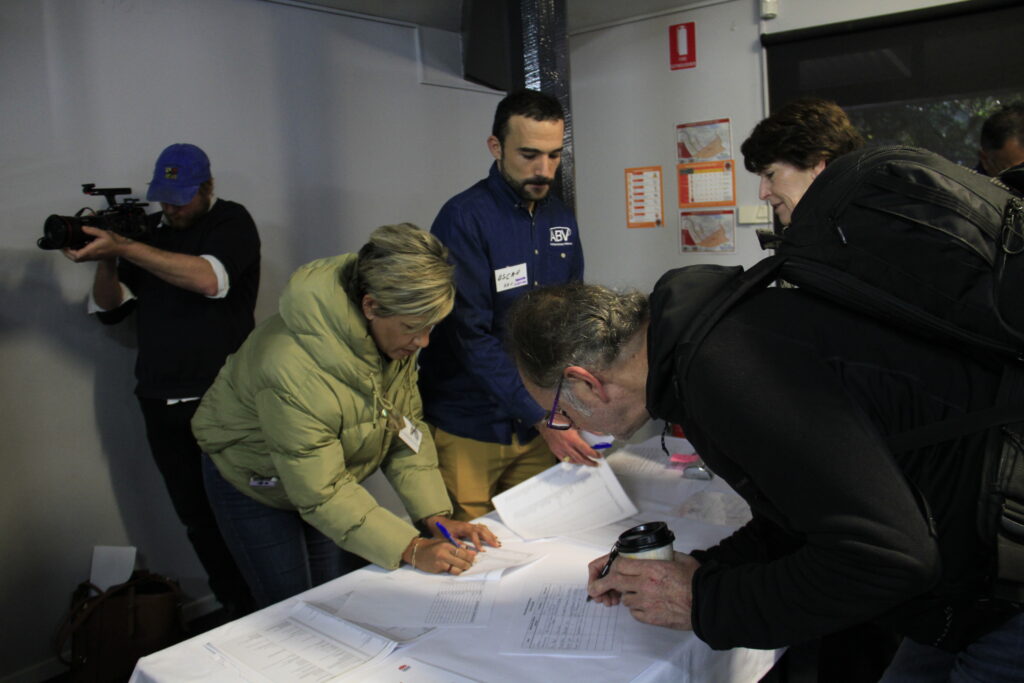
Image: Melanie Grills (Arup’s Associate Principal of First Nations Programs & Projects) and Oscar Mussons (ABV’s Program Director of Australia Programs) signing in participants at the Cultural Burning Conference 2023.
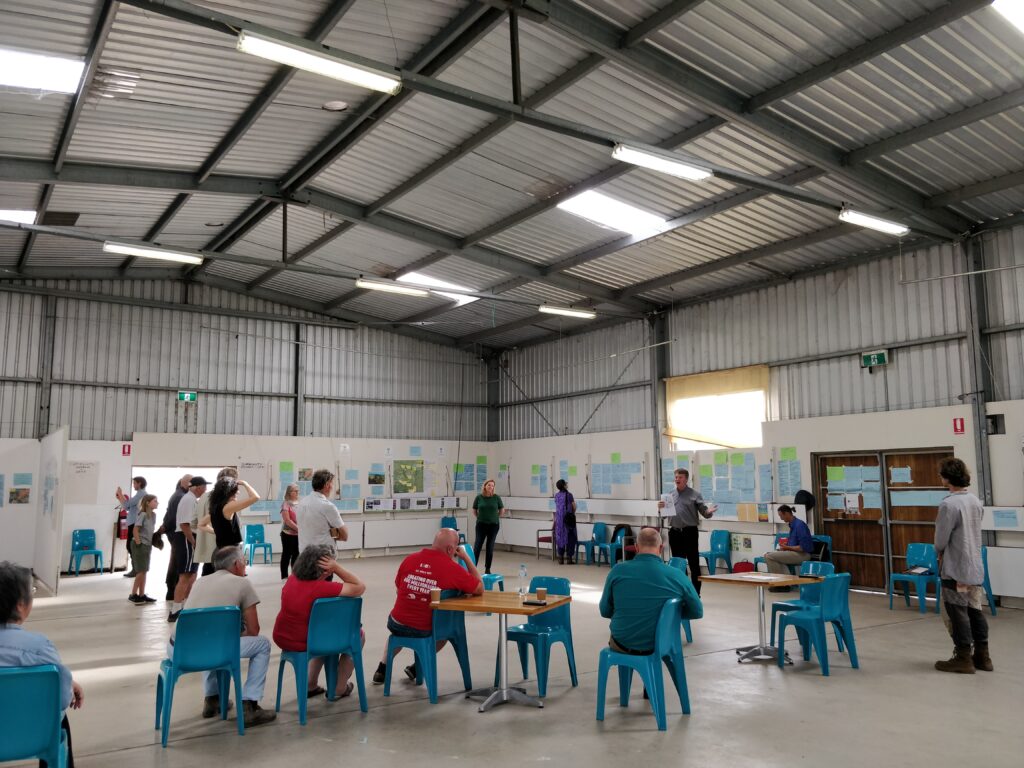
Image 3: Edward Rowe (Arup’s Resilience and Adaptation Lead for NSW/ACT and the Pacific) supported the Cobargo Visioning Workshops with ABV which brought together Cobargo’s community to share ideas and create disaster action plans.
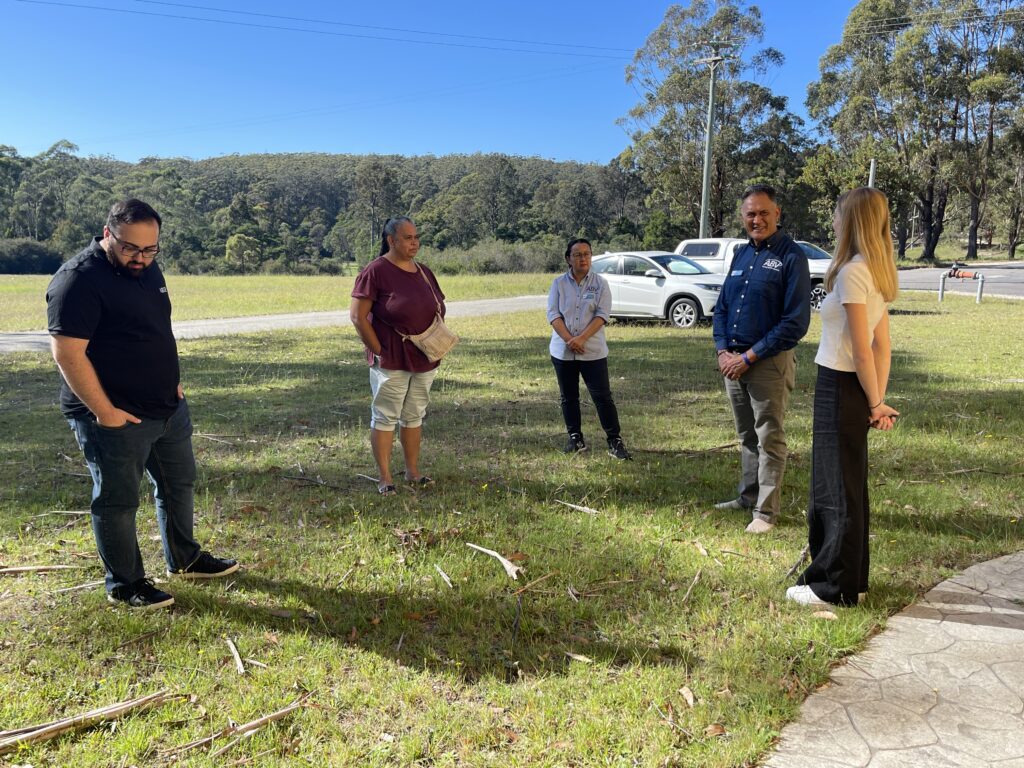
Image 4: Christopher Serrano (Arup Senior Environmental Consultant), Madison Downey (Arup Environmental Scientist), Thanda Bennett and George Barrett (ABV Australia Programs Team) Amanda Foster (Merrimans Local Aboriginal Land Council) meeting.
The Disaster Risk Reduction Fund (DRRF) is jointly funded by the Australian and New South Wales governments
NAB Corporate Volunteers are in community learning, exploring, and discovering how they can develop initiatives that foster a sustainable future while ensuring a thriving and supportive community.
The team of 11 volunteers are working in collaboration with the Future of Orbost and District Project and Australian Business Volunteers (ABV) as part of a NAB skilled volunteering Community Strategy Challenge. This nine day immersive experience is an initiative that supports communities in understanding areas of future potential and development of the economy, to deliver a brighter future.
For over six years, Australian Business Volunteers has been partnering with NAB to run immersive skilled volunteering projects for NAB colleagues, harnessing their skills and expertise to drive sustainable social change.
We love seeing a team of people come together to make meaningful difference through the application of their skills, experience and personal motivation!
Subscribe to Our Newsletter
Sign up here to receive email communications about current ABV news and events.